23 November 2026
How Do Astronauts Go to the Bathroom in Space?
How do astronauts go to the bathroom without gravity? Explore how space toilets work, what happens to astronaut waste and the surprising connection to vacuum toilet technology on Earth.

Houston, we have a very down-to-Earth question!
Travelling into space sounds incredible. Imagine looking down at Earth from hundreds of kilometres above, floating in microgravity and taking part in groundbreaking scientific experiments.
But sooner or later, even the most highly trained astronaut faces a very ordinary human problem.
They need to go to the bathroom.
So how do astronauts use the toilet when gravity isn't there to help?
On the International Space Station (ISS), astronauts use specially designed toilets that rely on airflow to collect and move waste. These systems work in microgravity, where liquids and other materials don't behave the way they do on Earth.
And yes, astronauts actually have to train to use them.
Why Don't Regular Toilets Work in Space?
Here on Earth, gravity does much of the work. We flush, water carries the waste away, and the plumbing takes care of the rest.
In space, things get a little more complicated.
Astronauts aboard the ISS experience microgravity. Water doesn't simply flow downwards, and objects don't stay where you leave them.
Now imagine flushing a regular toilet while everything around you is floating.
Let's just say nobody would volunteer for that clean-up.
That's why space toilets use fans to generate airflow, helping direct waste into specially designed collection systems.
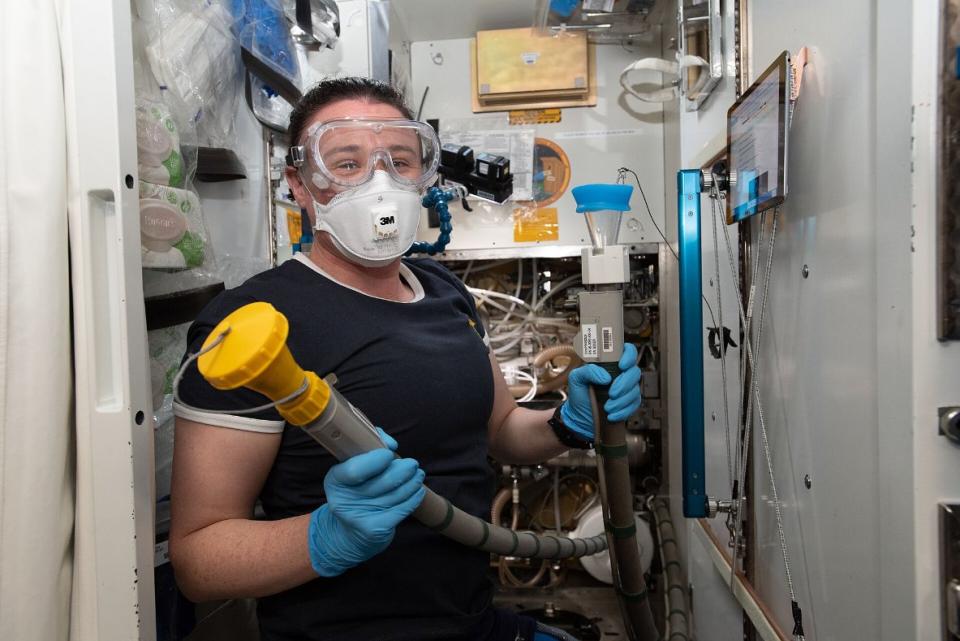
A space toilet looks more like a piece of advanced engineering equipment than something you'd find in your bathroom at home.
According to NASA, toilets aboard the ISS use airflow, specialised attachments and separate systems to collect urine and solid waste.
Here's how it works:
The astronaut secures themselves in position. Foot restraints and other supports help them stay in place instead of floating away.
Urine is collected through a hose and funnel. Airflow draws the liquid into a dedicated collection system.
Solid waste is collected separately. Fans help direct it into a specially designed container.
Water is recovered from urine. The station's water recovery equipment processes collected urine, and the recovered water undergoes further purification.
Sounds complicated?
Now imagine doing all of that while floating in microgravity.
That's why astronauts practise using space toilets during their training on Earth.
Where Does Astronaut Waste Go in Space?
So, what happens after an astronaut flushes?
The answer depends on the type of waste.
Solid waste is stored in specially designed containers. Some of it is eventually loaded onto uncrewed cargo spacecraft that burn up during re-entry into Earth's atmosphere.
Urine has a much more interesting journey.
The International Space Station uses advanced recycling systems to recover water from urine, moisture in the air and other sources.
After several stages of treatment, purification and testing, the recovered water can be reused by the crew, including as drinking water.
Yes, you read that correctly.
Water recovered from urine can eventually become safe drinking water.
This helps NASA reduce the amount of fresh water that needs to be transported from Earth.
When you're living hundreds of kilometres above the planet, every drop counts.
How Much Does a Space Toilet Cost?
Think renovating your bathroom is expensive?
NASA might make you feel a little better about your budget.
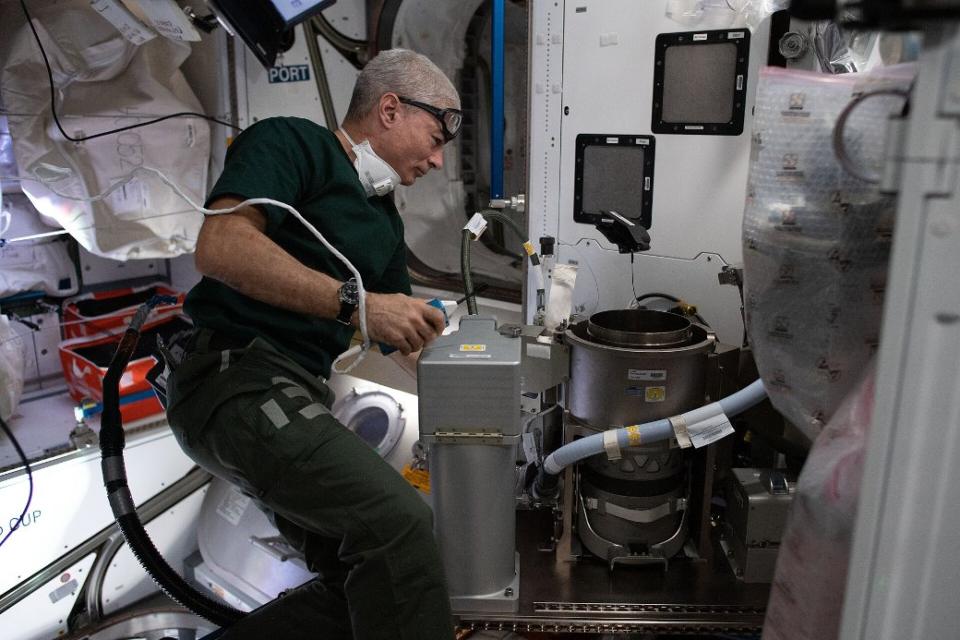
In 2020, NASA sent a new space toilet to the International Space Station. It's called the Universal Waste Management System (UWMS).
The toilet was developed as part of a project valued at approximately $23 million.
Yes, million.
To be clear, that figure refers to the development project, not the retail price of a single toilet.
The new design is approximately 65% smaller and 40% lighter than the previous toilet used in the US segment of the ISS.
And that matters.
In space, every centimetre of available room and every kilogram of equipment makes a difference.
Suddenly, your bathroom at home seems like a pretty good investment.
How Did Astronauts Go to the Bathroom Before Modern Space Toilets?
Early space missions were a long way from the relative comforts of today's International Space Station.
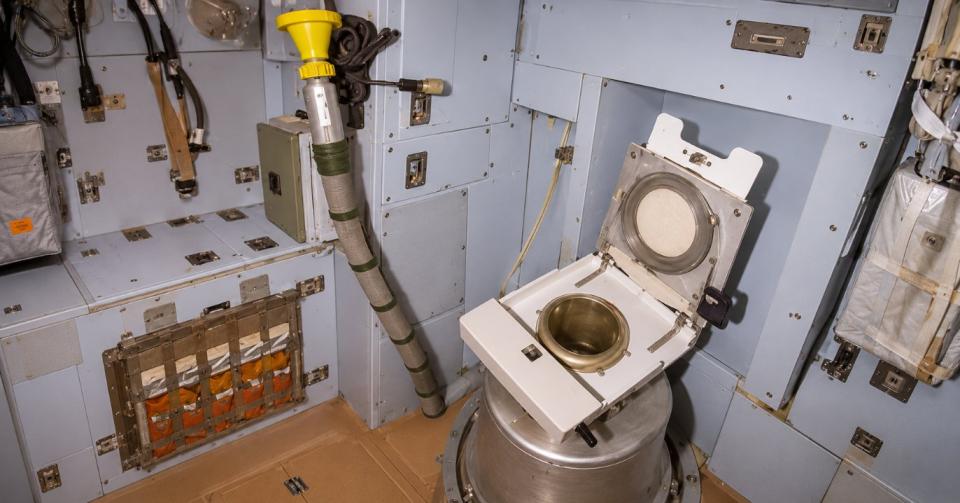
During the first American spaceflights, astronauts relied on special collection bags and devices to manage human waste.
The Apollo missions, for example, didn't have anything resembling a modern toilet.
Astronauts used individual waste collection systems that were often uncomfortable, inconvenient and time-consuming.
Imagine travelling all the way to the Moon without a proper toilet.
That's probably one detail future space tourism brochures will leave out.
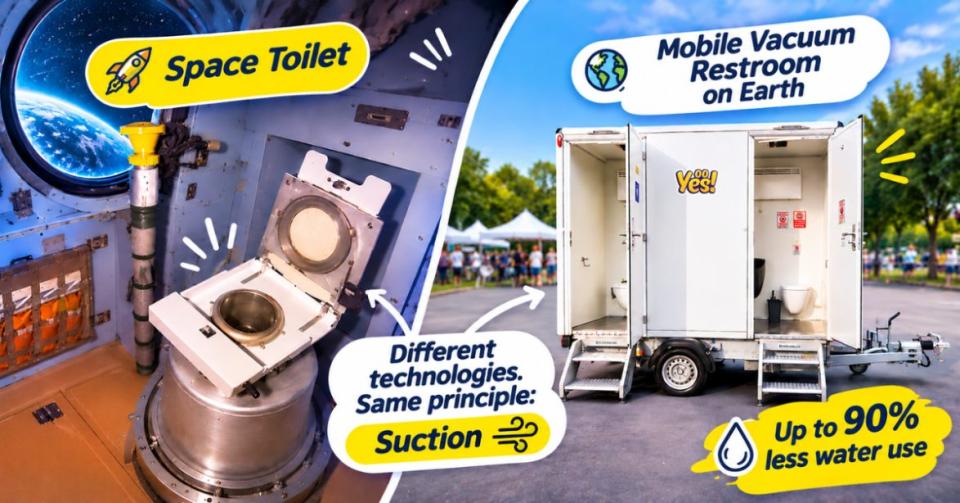
What Do Space Toilets Have in Common with Vacuum Toilets on Earth?
At first glance, a space toilet and a vacuum toilet on Earth might seem like completely different technologies.
But they share an interesting principle: both use suction to help move waste.
In space, fans create airflow that directs waste into collection containers. This is essential in microgravity, where waste cannot be collected in the usual way.
On Earth, vacuum sanitation systems work differently.
Vacuum toilets use a pressure difference to transport waste through a pipe system while requiring very little flushing water.
This low water consumption is one of the main advantages of vacuum toilet technology.
The vacuum sanitation systems offered by OoYes for festivals, concerts, private celebrations and corporate events can use up to 90% less flushing water than conventional flush toilets, depending on the systems being compared and the operating conditions.
This makes vacuum toilets particularly useful for outdoor events and temporary locations where water supplies are limited or need to be arranged separately.
Of course, space toilets and terrestrial vacuum toilets differ in their design, purpose and operation.
What they share is the use of pressure differences to control the movement of air and waste, although they apply this principle in different ways.
Fortunately, you don't have to be an astronaut to benefit from vacuum toilet technology.
Frequently Asked Questions About Toilets in Space
Do astronauts have real toilets on the International Space Station?
Yes. The ISS has specially designed toilets that use airflow to collect waste in microgravity. Unlike conventional toilets on Earth, they don't rely on gravity and standard water flushing.
How do astronauts use the bathroom without gravity?
Astronauts use foot restraints and other supports to stay in position. Fans create airflow that directs urine and solid waste into separate collection systems.
Do space toilets use water to flush?
No. Toilets aboard the International Space Station don't use conventional water flushing. Instead, airflow helps collect and move waste into dedicated containers.
Do astronauts recycle their urine?
Yes. The ISS has specialised systems that recover water from urine. After extensive purification and testing, the recovered water can be reused, including for drinking.
Are space toilets the same as vacuum toilets on Earth?
No. Both use suction, but they operate differently. Space toilets use airflow to collect waste in microgravity, while terrestrial vacuum toilets use pressure differences to transport waste through pipes with very little flushing water.
Small Human Needs Behind Big Space Discoveries
When we think about space exploration, we picture rockets, distant planets and extraordinary scientific discoveries.
We rarely think about the everyday essentials that make life possible: water, food, sleep and, of course, toilets.
Yet these basic human needs have inspired some remarkable engineering solutions.
So next time you visit the bathroom, remember that somewhere high above Earth, an astronaut might be doing exactly the same thing.
Just with a little more preparation.
And a whole lot more technology.
Read More